
2003 Llangollen International Musical Eisteddfod
The Impossible Dream:
Winning at the International Musical Eisteddfod
On July 12, Mastersingers USA competed for the first time in the Llangollen International Musical Eisteddfod at Llangollen, Wales.
An “eisteddfod” in Welsh is simply a gathering for some kind of exchange: cultural, political, etc. This particular event, however, which has been held annually since 1946, has become the premier international competition for musicians and musical groups, comprised of several thousand people who compete in 30 categories.
Our director, Bruce McInnes, participated in the International Eisteddfod as a member of the Yale Glee Club in 1963 (they placed 2nd). For the rest of us, however, this was a completely new experience.
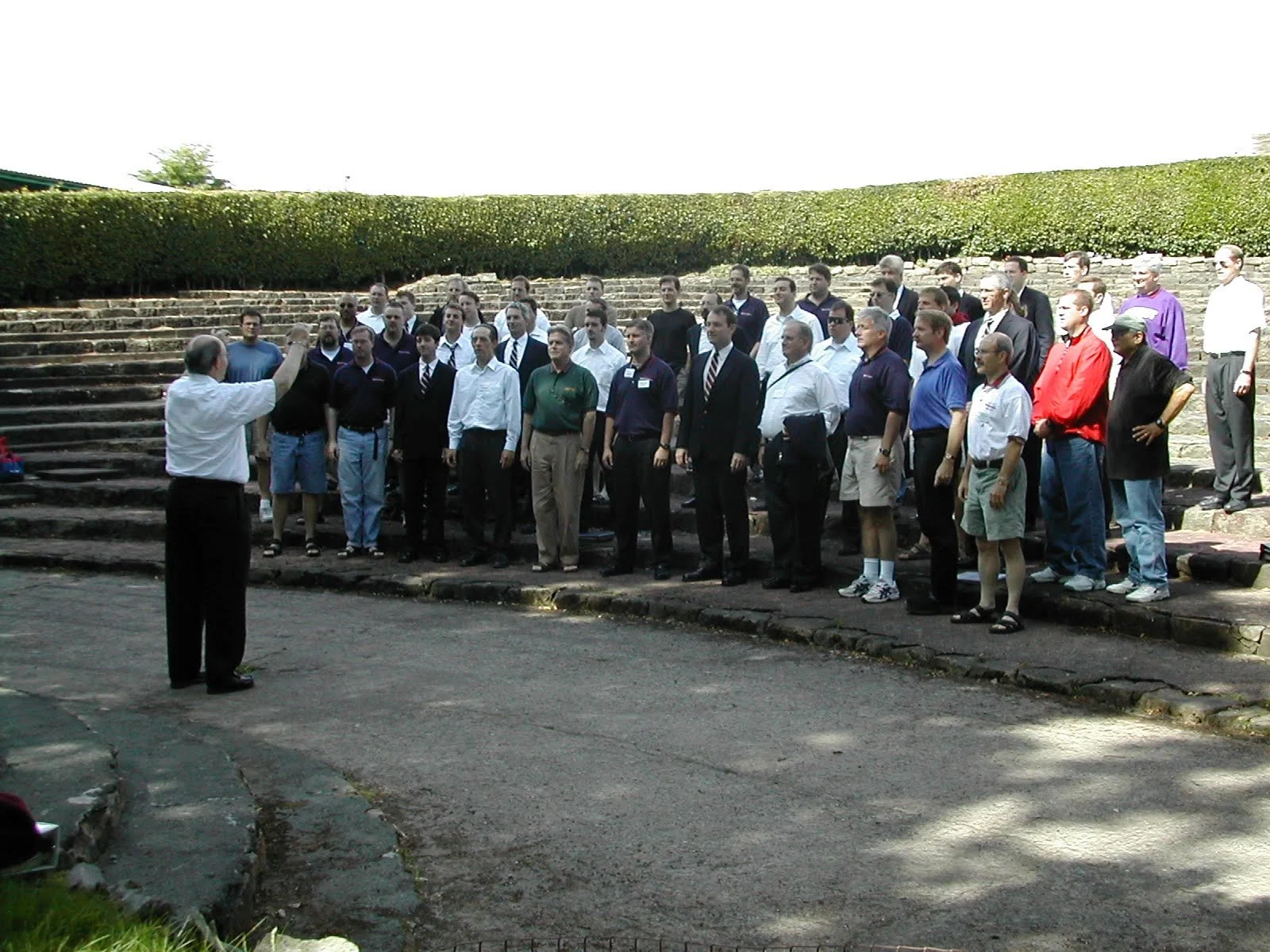
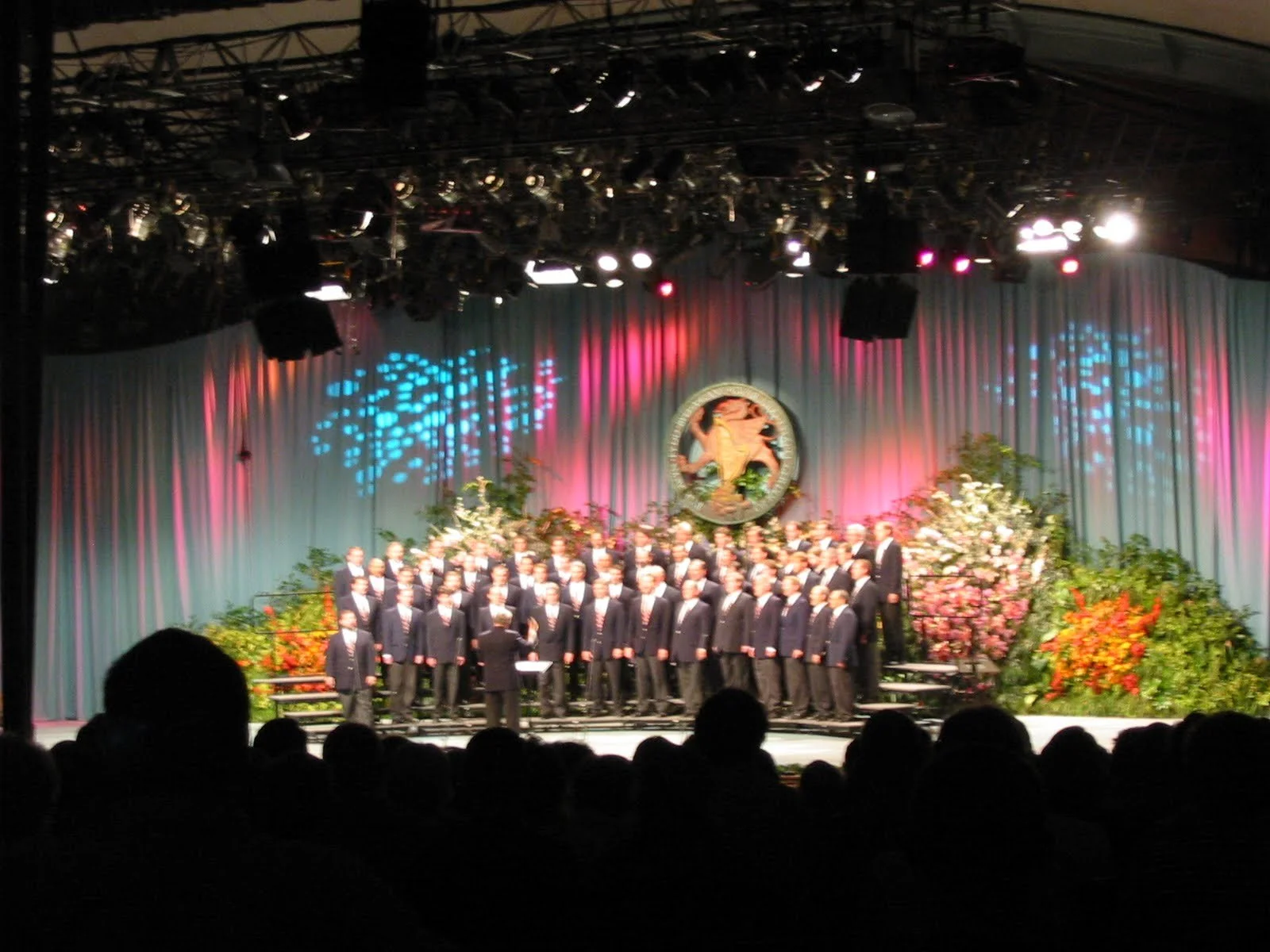
Although there are competitions for solo vocalists and instrumentalists and for large and small mixed choirs, the premier event is the competition among male choirs, which are so popular in Wales. We were pitted against 13 other choruses, 6 from Wales, 6 from England, and one from Germany. (A chorus cannot compete without prequalifying.) Of the 14 men’s choruses, we were scheduled to sing in the 12th position in the nearly 5-hour competition.)
Each group was to sing 3 pieces: (1) a required piece called “Daffodils,” which could be sung in either Welsh or English, (2) a piece by a composer from the group’s own country, and (3) any other piece. The latter two pieces were limited to 9 minutes’ duration. The pieces we selected were “All That Hath Life and Breath” by Rene Claussen and “Thy Word Is a Lantern” by Fenno Heath. As for “Daffodils,” we decided to sing it in Welsh, thinking that the effort required to sing the piece in its native language would go over well with what we presumed would be a largely Welsh audience and judging cadre.
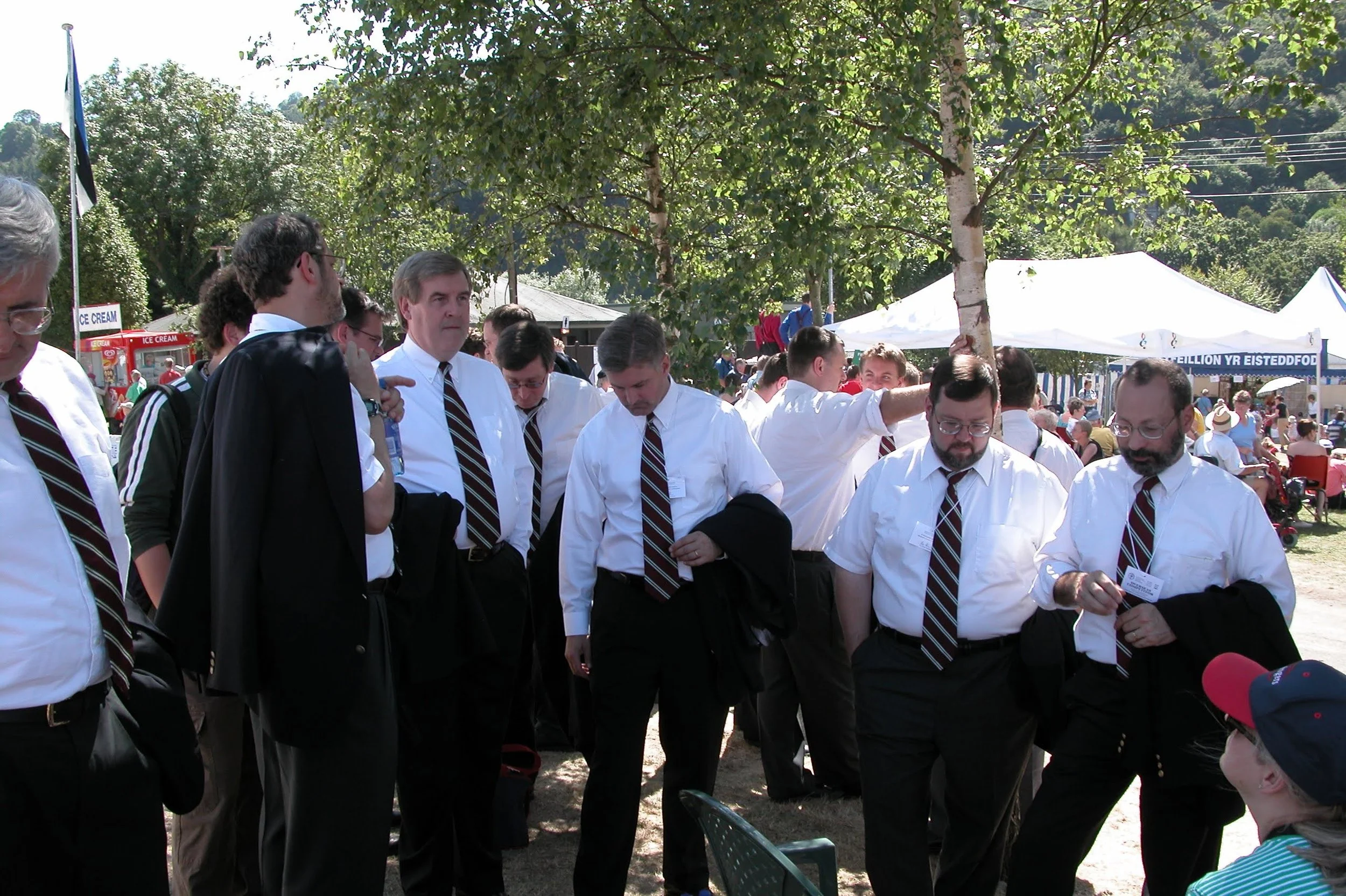
Each of us had devoted enormous effort to memorizing “Daffodils” and getting the pronunciation right. (All our music is memorized anyway.) One of our members carefully transcribed a recording of a Welshman reading the text and prepared a study edition for us to use in learning the words before we met for pre-tour rehearsals. Then, when we were in Dublin singing with the Dublin Welsh Male Voice Choir, we asked their director (himself a Welshman) to go over the pronunciation and correct our mistakes. One of our members videotaped his response, and another member did a painstaking analysis of the video, re-editing our working scores with a sung transliteration of the Welsh and paying careful attention to dynamics and the handling of diphthongs (which are so complicated in Welsh).
We gave our best effort to the assembled audience (of about 1500 in a hall that accommodated 4,500) and to the panel of 5 judges. It created quite a stir when the emcee told them that we were from all over the U.S. and 2 other countries and that we convene to rehearse only one weekend a year. People were also surprised to hear that we would try “Daffodils” in Welsh (no other non-Welsh group did), and we must have gotten the pronunciation right because they were very enthusiastic when we finished.
We felt we had done our best – which was our primary goal – but we felt we had also done well in comparison to the other choruses, some of whom had been past winners. But we had to wait more than an hour for the results. These consisted of a detailed critique of each group’s performance of each piece, and when these critiques were concluded, scores were given for each piece – first in Welsh and then in English, followed by a composite score.
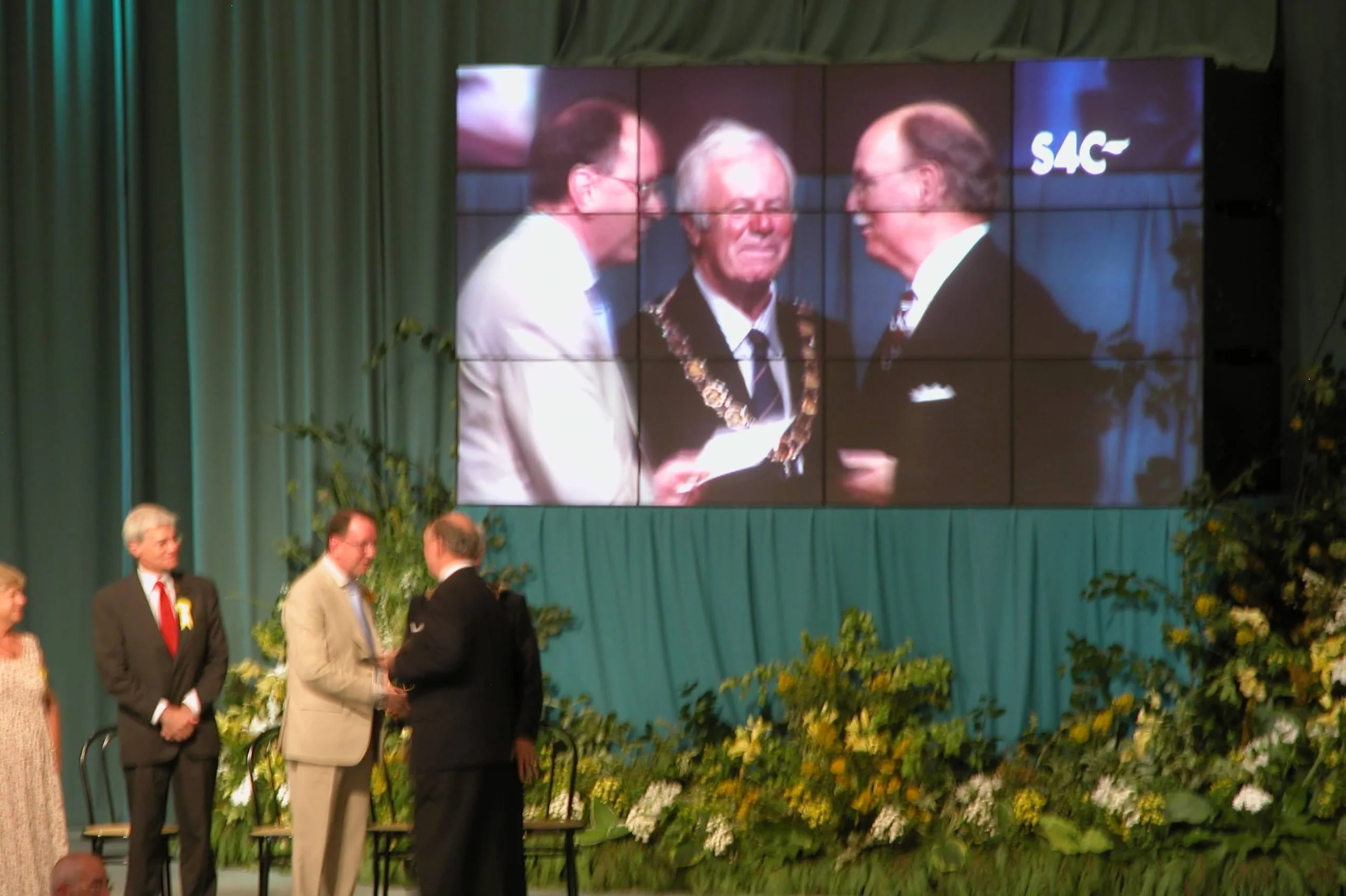
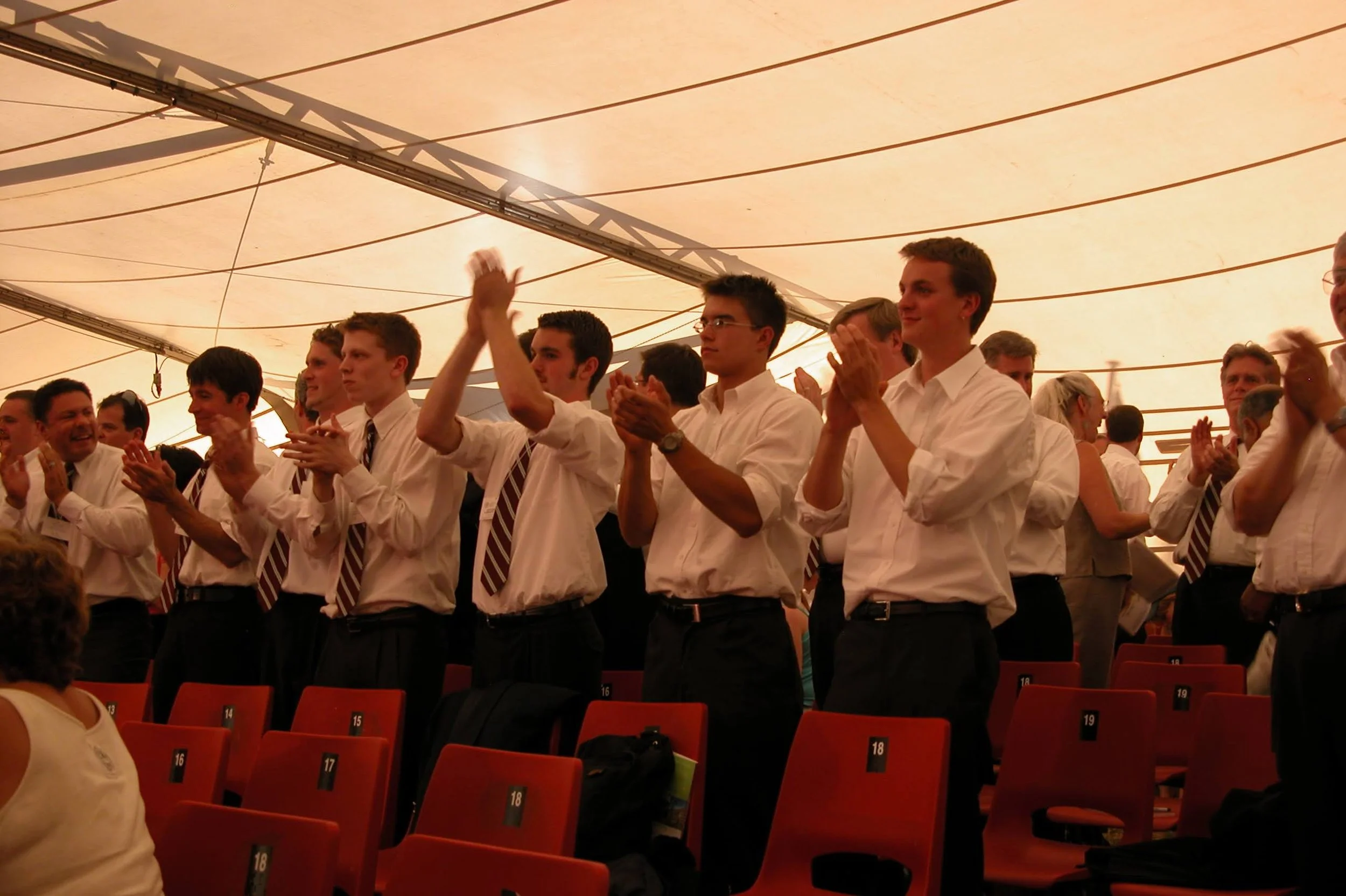
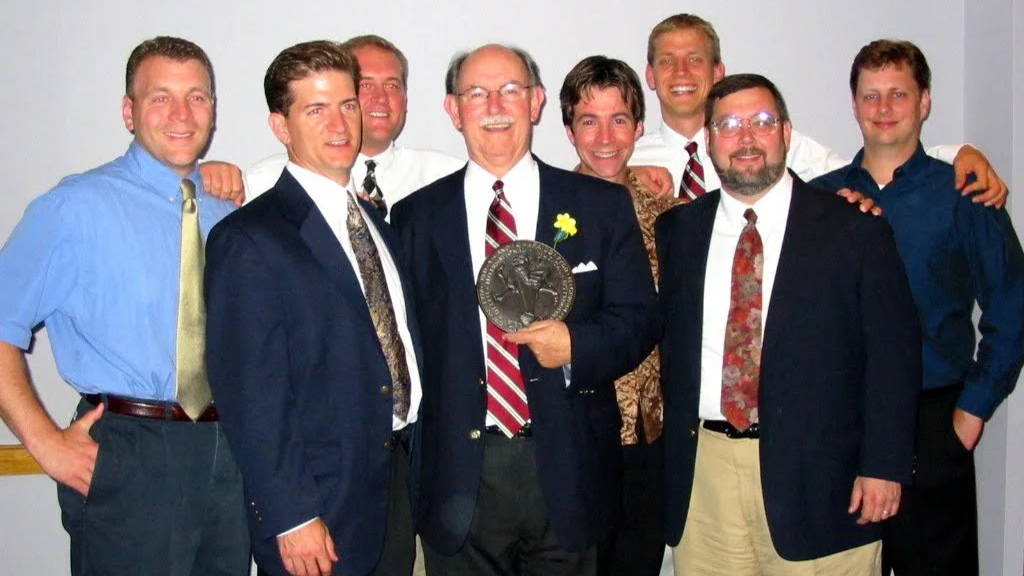
It took a few seconds to realize that our overall score was the highest. Then we exploded with pent-up emotion on having achieved what had seemed impossible, something we had not even dared to dream of. And our joy and exultation were shared by the family members who had joined us for the latter part of the tour and by our new-found fans among those who had heard us sing for the first time. When our director went to the stage in front of the cameras of BBC Television/Wales to receive the prize plaque (and later, a check for £1000), in what was the culmination of a quest he had begun 46 years earlier, we realized that we had just had the experience of a lifetime.
We weren’t through, though. We learned that our win in the male choir competition had qualified us to be in the “Choir of the World” competition that evening, to begin in just a few hours. Practically and emotionally, we were hardly prepared for another competition, Bruce chose 3 of our best pieces — “Mary Had a Baby,” “Ave Maria” (Biebl), and “Soon-Ah Will Be Done” — and we got ready to go before a larger audience (the 4,500 capacity of the venue), not to mention the cameras of BBC/Wales.
We were the third of three groups to perform, and we gave it our best despite our fatigue. But the top prize went to the Northridge Singers of California State University, a mixed choir of college kids, who put on a brilliant performance, with elaborate choreography and percussion. So we didn’t succeed in the final competition (doing so would have meant we could never compete again), but we still left Llangollen with the feeling that we were winners and had accomplished the goals we came with — and more.
Written by Dick Frantzreb
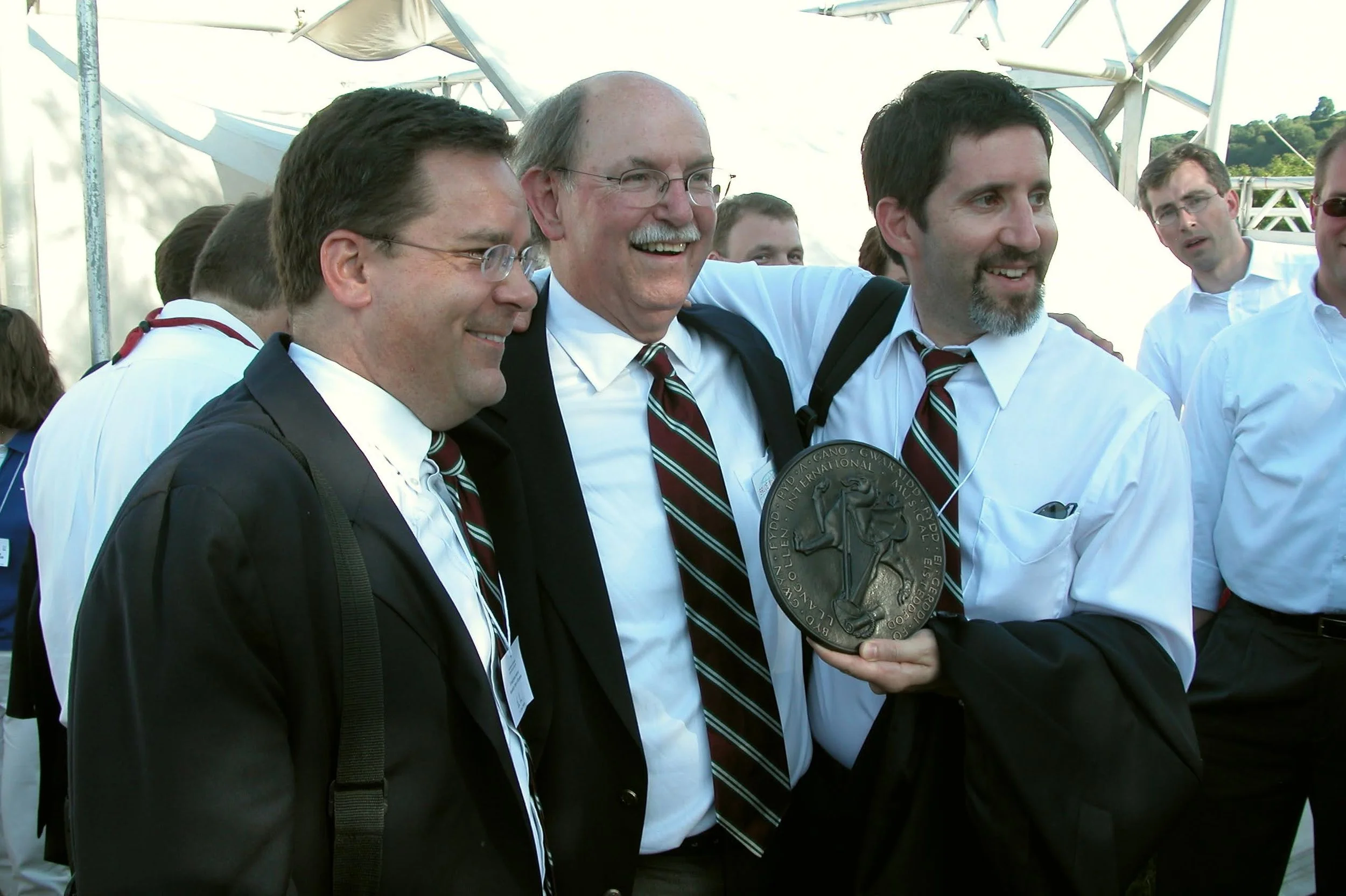
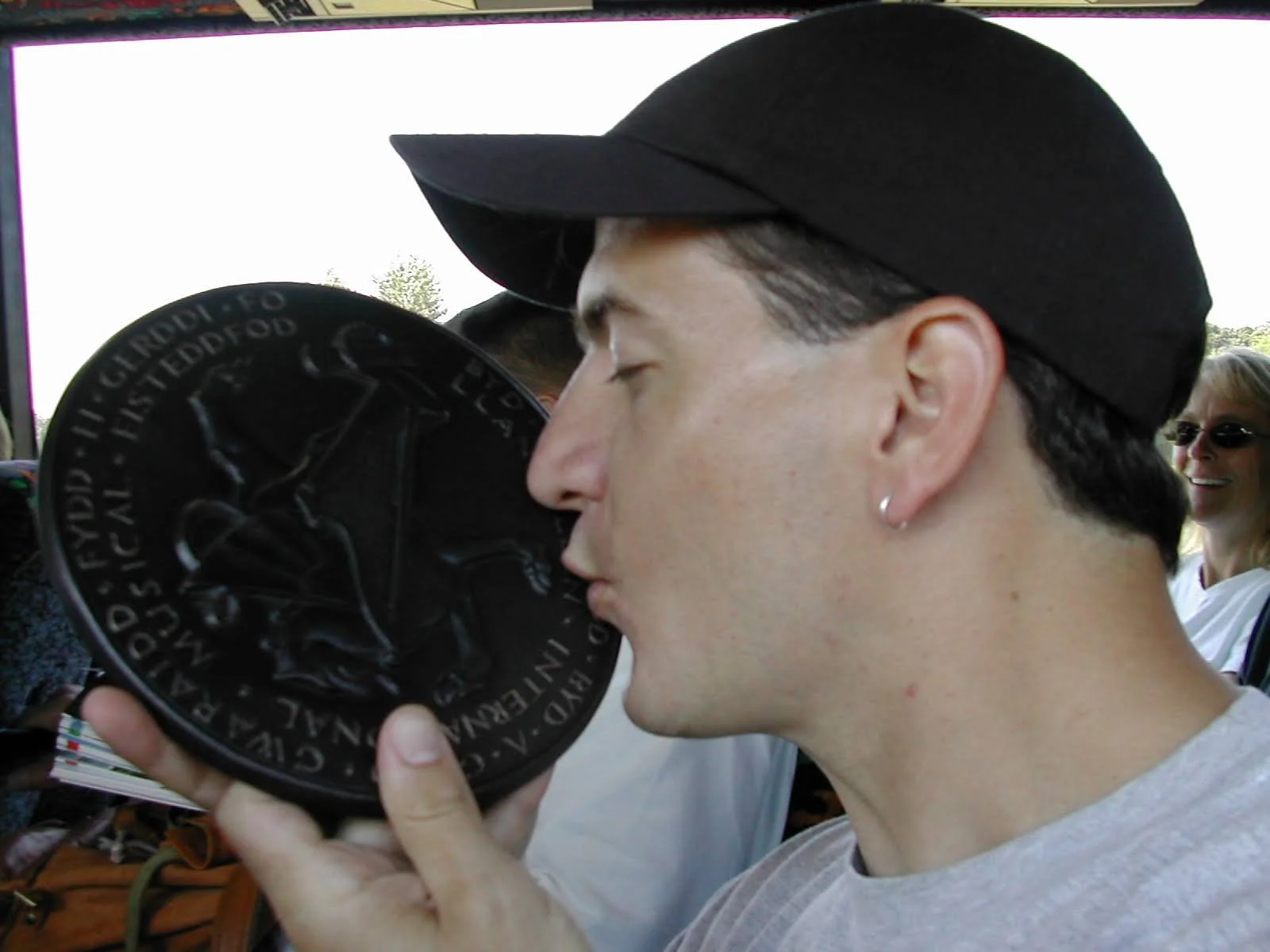
To view other photos from this weekend click here.